
The TXES062 is a portable, oil-free high-pressure air compressor rated for a maximum working pressure of 4,500 PSI / 300 Bar / 30 MPa. It is powered by either 110V/220V AC from a wall outlet or 12V DC from a vehicle battery, with an onboard converter that allows the same unit to run from either source without external adapters. Air output is rated at approximately 11 L/min, and a 0.5 L tank can be brought from 0 bar to 300 bar in roughly 12–15 minutes depending on inlet conditions and ambient temperature.
Those numbers are not arbitrary. The 4,500 PSI ceiling is the working pressure that matters for PCP air rifles, paintball HPA tanks, and small diving cylinders, which are the three application families where this class of compressor is most often deployed. The dual-voltage architecture is the feature that separates the TXES062 from fixed-voltage alternatives: the same machine that fills a PCP bottle at home on AC can be moved to a vehicle and powered from the 12V battery, provided the circuit can supply at least 40 A.
The oil-free, water-free design is not a marketing preference—it is an air-quality decision. Oil-lubricated compressors in the portable high-pressure class can produce oil carryover and require downstream filtration to protect the air path; the TXES062 removes that variable at the source by eliminating oil from the compression chamber altogether. For PCP rifles and breathing-air-adjacent applications, that simplifies the filtration chain and reduces the risk of contaminant introduction during field fills.
The TXES062 also includes an auto-stop function and a built-in fan cooling system, both of which matter more in portable use than on a shop floor. Auto-stop prevents over-pressurization when the operator is focused on the fill gauge rather than the compressor; fan cooling allows the unit to recover between fills without relying on external water cooling. The vertical, spool-style form factor is a deliberate portability choice—the wire spool keeps the power cord organized, and the vertical orientation keeps the footprint compact enough to store in a vehicle or a gear bag.
Choosing a compressor without matching it to the application is the most common procurement mistake in this segment. The selection framework should start with three variables: required pressure, required air volume, and power availability.
Oil-free compressors are the appropriate choice when the downstream air must remain free of oil particulate, or when the operator wants to avoid oil-level maintenance in a portable environment. The trade-off is that oil-free designs generally require more careful thermal management and are less tolerant of continuous heavy-duty cycling than oil-lubricated industrial compressors. For the TXES062’s target duty cycle—intermittent fills of PCP tanks, paintball bottles, and small dive cylinders—the oil-free architecture is well matched. For continuous industrial plant air, a rotary screw or piston compressor from our broader range is the correct category.
The TXES062 is not a substitute for a shop-air system. It is a fill-station compressor: it is designed to bring a finite-volume vessel up to 4,500 PSI efficiently, not to supply continuous CFM to pneumatic tools. Buyers who need 10+ CFM at 100–150 PSI for sustained tool operation should be looking at piston or screw compressors, not a portable PCP-class unit. This distinction prevents the most common mismatch in this category.
A dual AC/DC compressor is the right specification when the fill location changes—home, range, vehicle, remote site. The TXES062’s 12V DC input at 40 A means it can run from a vehicle electrical system without a separate inverter, which is a meaningful operational simplification in field use. If the buyer’s use case is strictly benchtop, a single-voltage unit may be less expensive; if mobility is part of the workflow, the dual-source design eliminates a separate power accessory.
For applications where the output air touches breathing systems or sensitive equipment, ISO 8573-1 provides the internationally recognized purity framework for particles, water, and oil. The TXES062’s oil-free compression path is a starting point for cleaner air, but buyers with regulated breathing-air or medical-adjacent requirements should specify the complete filtration and testing chain, not only the compressor’s oil-free status. Our dive-oriented compressor lines incorporate multi-stage filtration targeting EN 12021 and CGA G-7.1 breathing-air standards; the TXES062 is positioned for PCP, paintball, and small-cylinder fills where that level of breathing-air certification is not the governing requirement.
The TXES062 is designed, produced, and exported by Xiamen Subang Technology Co., Ltd., operating under the TUXING brand. The company was established in 2016 in Xiamen, China, and has been manufacturing high-pressure air compression equipment since then.
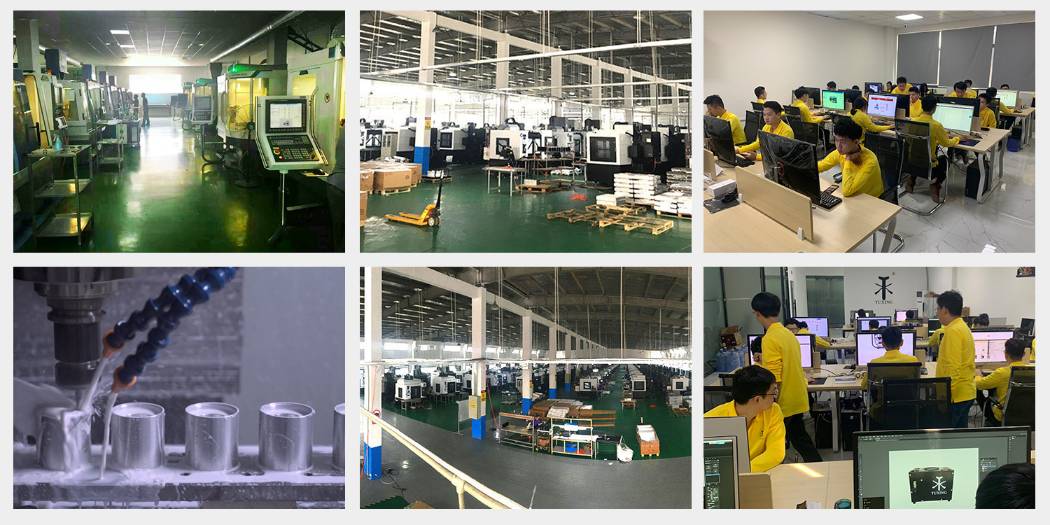
Manufacturing capacity and vertical integration. Xiamen Subang maintains an annual production capacity of 20,000 pumps, 3,000 compressors, and 50,000 filters. The company is a manufacturer, not a trading intermediary, which means production processes, quality inspection, and supply-chain management are controlled in-house. That distinction matters for buyers evaluating consistency across repeat orders and for OEM/ODM programs where specification changes must be traceable.
Certifications and compliance. TUXING products hold CE and RoHS certifications, and the company’s quality system references ISO certification. Cylinders in the broader TUXING range are tested to EN 12245, with carbon-fiber models additionally referencing GB28053, DOT-CFFC, and ISO 11119-3 for applicable markets. Each compressor unit is subject to quality-control procedures before shipment to support performance consistency and operational safety.
Intellectual property and market experience. Xiamen Subang holds 67 registered trademarks and 6 patents, including a design patent for a vehicle-mounted high-pressure air pump—an indicator of engineering focus in the portable high-pressure segment rather than pure catalog reselling. The company exports to more than 80 countries and serves PCP enthusiasts, dive operations, outdoor professionals, distributors, and OEM/ODM partners. It participates in international trade exhibitions including IWA OutdoorClassics in Nuremberg and the Istanbul Hunting & Outdoor Show, which provides direct exposure to distributor and end-user requirements across different regulatory environments.
Commercial terms for trade buyers. Standard OEM/ODM orders carry a minimum order quantity of 100 units, with a typical lead time of approximately 15 days after order confirmation. This structure is designed for distributors and private-label brands rather than one-off retail purchases, and it allows specification and packaging adaptation at volume.
Before placing an order for a portable 4,500 PSI compressor, the following checks separate a workable specification from an expensive mismatch:
1. Confirm the pressure and volume requirement. 4,500 PSI is the ceiling; the fill time for the actual vessel size is the operative metric. A 0.5 L bottle and a larger small dive cylinder will not fill at the same rate. Request fill-time data for the specific vessel the unit will serve, not only the maximum-pressure rating.
2. Verify the power source compatibility. For 12V DC operation, confirm that the vehicle circuit can supply the required current (the TXES062 specification calls for 40 A DC input). For AC operation, confirm the voltage and plug type for the destination market.
3. Clarify the duty cycle. Portable oil-free compressors are intermittent-duty machines. Ask the supplier for the recommended run/rest cycle for the intended fill frequency. If the application requires near-continuous operation, a different compressor class is the correct selection.
4. Request the certification file for the exact model. CE and RoHS apply at the product level; confirm that the certificate references the model being purchased and the destination market’s requirements.
5. Check filtration and moisture management. Even oil-free compressors produce condensate. Confirm the built-in water/oil separation and drainage provisions, and whether an additional dryer or filter is recommended for the target application.
6. Evaluate the supplier’s production consistency, not only the sample. A single working sample proves the design; a documented QC process and production capacity prove the supply. Ask for the factory’s QC flow, annual capacity for the specific model line, and lead-time commitments for repeat orders.
7. Confirm OEM/ODM terms early if private label is the goal. MOQ, branding options, packaging, and documentation language should be agreed before tooling or labeling begins.
The TXES062 is a deliberately focused machine: 4,500 PSI, oil-free, dual AC/DC power, and a portable form factor for PCP, paintball, and small-cylinder filling. It is not the right compressor for every air demand, but for buyers who need high-pressure air where a shop line cannot reach, the specification choices—dual-source power, auto-stop, fan cooling, and an oil-free compression path—are the ones that determine whether the unit is a useful tool or a shelf-bound accessory.
Behind it, Xiamen Subang Technology brings in-house manufacturing, CE/RoHS compliance, documented production capacity, and export experience across 80+ countries to the table. For distributors and OEM partners evaluating this category, the next step is not simply a price request; it is a specification conversation around vessel size, duty cycle, power environment, and certification scope. That is the conversation we are set up to have.
Xiamen Subang Technology Co., Ltd. — TUXING brand high-pressure air compression equipment. Manufacturer, not trader. Factory-direct supply for distributors and OEM/ODM partners worldwide.



Mapa del sitio Blog Xml política de privacidad
Derechos de autor
© 2026 Xiamen Subang Tecnología Co., Ltd. Reservados todos los derechos
.
 RED SOPORTADA
 español
 English
 français
 português
 العربية
 中文

